CS:GO Is Counter-Strike at Its Best
Counter-Strike: Global Offensive came out in 2012 on PC, Xbox 360 and PS3, made by Valve and Hidden Path Entertainment. It ran for 11 years as the main Counter-Strike, until Counter-Strike 2 replaced it in 2023.
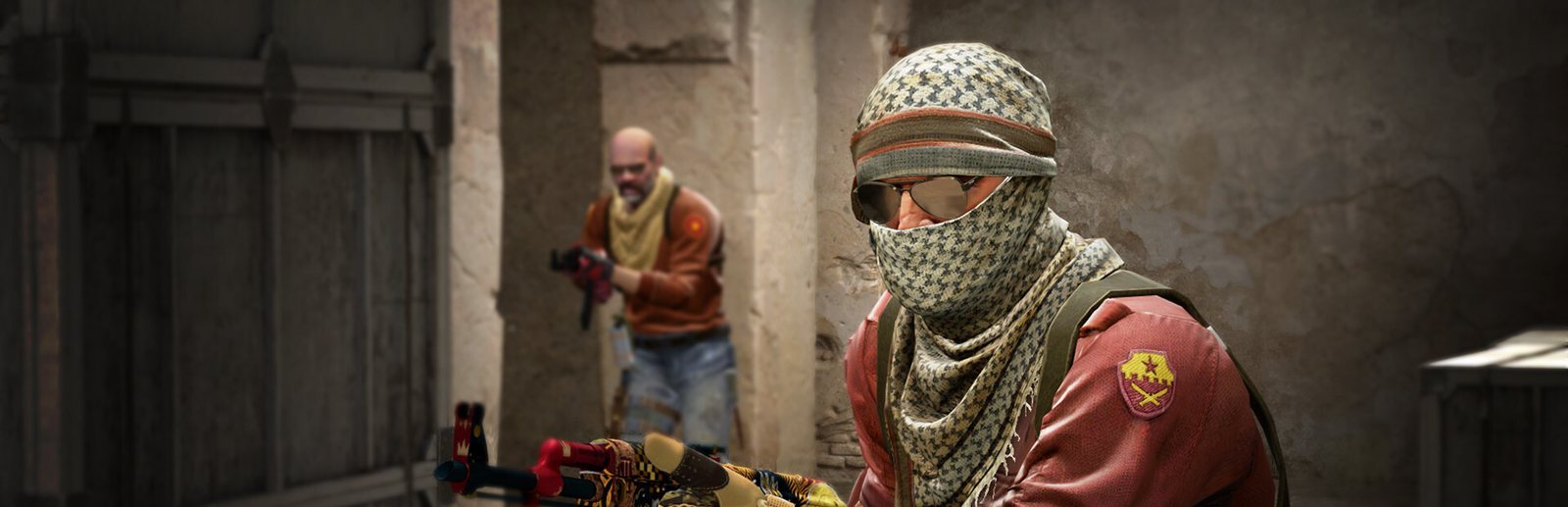
Counter-Strike: Global Offensive is a 10, and Samuel doesn't have a single complaint about the game itself. The engine? Yeah. The matchmaking? Yeah. The community? YEAH. Everything about this game is YEAH, and for 11 years it was the best Counter-Strike there was.
What CS:GO is
CS:GO came out on August 21, 2012, on PC, Xbox 360 and PS3, made by Valve together with Hidden Path Entertainment. It's classic Counter-Strike: two teams of five, terrorists against counter-terrorists, with one side planting the bomb and the other defusing it or wiping the team out. Every round you earn money, and every round you decide how to spend it.
The gunplay
The shooting is what makes it. Every gun has its own recoil pattern, so spraying isn't random, it's a skill you learn and get better at. The AK-47 can drop someone with one headshot, the AWP is the most feared gun in the game, and the Desert Eagle can turn a pistol round into a highlight. The 2013 Arms Deal update added the M4A1-S and the USP-S, giving the counter-terrorists silenced options, and those became staples too.
The economy ties it all together. Win and you can afford rifles and full armor, lose and you're deciding whether to save, force buy or gamble on a cheap round. That back-and-forth makes every single round matter, not just the last one.
The engine
The engine? Yeah. CS:GO ran on Valve's Source engine, the same family behind Counter-Strike: Source and Half-Life 2, and it was polished for years. Movement is crisp, hits feel instant, and the game ran great on all kinds of PCs. Valve kept updating the look over time too, remaking classic maps like Inferno, Nuke and Dust II with sharper detail, and replacing the whole menu with the new Panorama UI in 2018.
The maps
The map pool is legendary. Dust II is probably the most famous map in shooter history, and next to it you had Mirage, Inferno, Nuke, Train, Overpass, Cache, Cobblestone and Vertigo. Every one of them is built around smart choke points, bomb sites and angles, and learning the smoke and flash lineups for each one is a game of its own.
The matchmaking
The matchmaking? YEAH. Competitive mode ranked you from Silver I all the way to The Global Elite, 18 ranks in all, and every match counted toward that climb. Prime status helped match you with other verified players, and the Overwatch system let experienced players review reports and get cheaters banned, so the community helped keep matches clean.
When you didn't want a full competitive match, there was a mode for everything. Casual and Deathmatch for warming up, Arms Race and Demolition for something faster, Wingman for two-on-two on smaller maps, Flying Scoutsman for low gravity and sniper-only chaos, and the Guardian co-op missions. When CS:GO went free-to-play in December 2018, it added Danger Zone, a fast battle royale that was a whole different way to play.
The community
The community? YEAHHH. CS:GO was built as much by its players as by Valve. Through the Steam Workshop, community creators made maps and weapon finishes, and a lot of them ended up in the official game. Cache, one of the most popular competitive maps, was made by the community.
Operations kept things fresh for years, from Operation Payback in 2013 to Riptide in 2021, bringing new community maps, missions and rewards. And the Arms Deal update brought weapon skins and cases, which turned into a huge part of the game: trading, collecting and showing off your loadout, all without changing how any gun actually plays.
The esports
CS:GO also became one of the biggest esports in the world. Valve started sponsoring Majors in 2013, beginning with DreamHack Winter, and for a decade the best teams on the planet played it on the biggest stages there are. Watching pros pull off clutches on maps you play yourself made the game even better.
On consoles
CS:GO came out on Xbox 360 and PS3 too, and the PS3 version even supported keyboard and mouse and the PlayStation Move. Samuel still rates the 360 version: in his CS2 review, he says he would rather play CS:GO on an Xbox 360 than CS2 today.
Where it went
On September 27, 2023, Counter-Strike 2 replaced CS:GO on Steam. For a while, the only way back was a legacy build tucked inside CS2, and support for that build ended on January 1, 2024. In March 2026, Valve gave CS:GO its own standalone Steam listing again, though it's unlisted and won't show up in search, so here it is:
(Valve even forgot the space in the name.)
His one complaint is about launching it: the standalone CS:GO takes about as long to launch as GTA V loading on the PS3, and so did the legacy branch inside CS2. It doesn't count against the game itself.
The verdict
Tight, skill-based gunplay. An economy that makes every round matter. Maps that became legends. Matchmaking with a real ladder to climb, a mode for every mood, a community that built half the game and an esports scene that ran for a decade. The engine, the matchmaking, the community: yeah, yeah and YEAH. Everything about this game is YEAH. A perfect 10.